
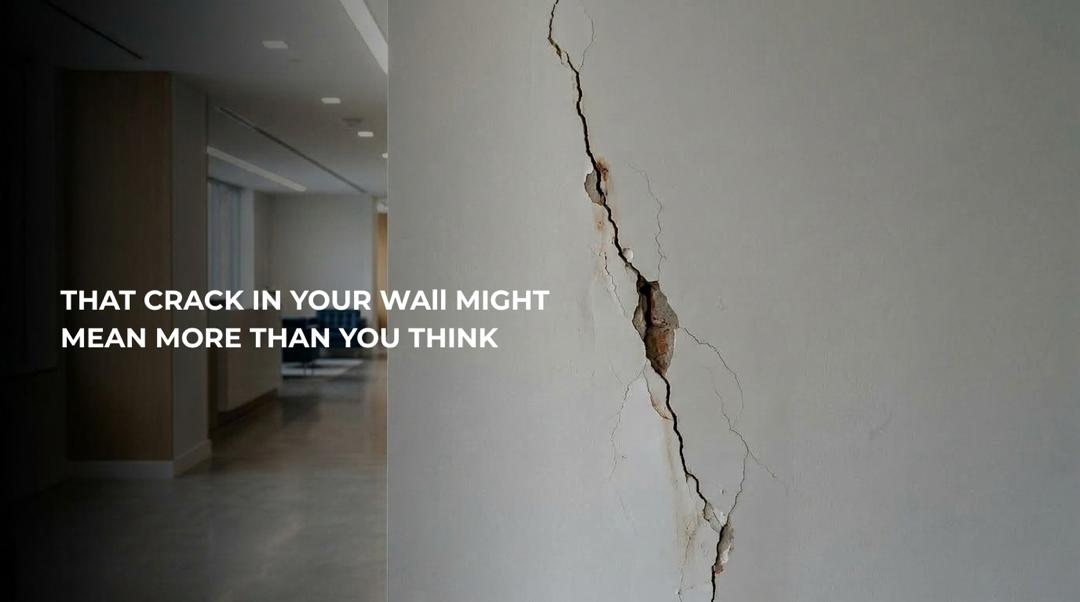
Not every crack in a wall means a building is in trouble. Some are superficial and can occur as materials settle, dry or respond to changes in temperature. Others, however, can point to underlying construction or structural issues that should not be ignored.
The important thing is knowing the difference.
A small crack around a window or door, for example, may be caused by movement where different materials meet. Hairline cracks can also appear as plaster or other finishing materials dry and settle. These may require attention, but they do not automatically indicate a structural problem.
The location, direction, size and progression of a crack can tell you much more.
Vertical cracks may have several possible causes, including normal settlement or movement within a building. Horizontal or diagonal cracks, particularly when they are wider, continue to grow or appear alongside other signs of movement, deserve closer inspection.
There are also cracks that appear alongside other warning signs such as sticking doors and windows, uneven floors, water penetration or visible separation around structural elements. When these occur together, simply filling and repainting the crack may only hide the symptom rather than address the underlying cause.
This is why diagnosing building defects should go beyond what is visible on the surface. The cause could relate to materials, workmanship, moisture, thermal movement, settlement or other aspects of the building’s design and construction. A qualified professional can assess the crack in context and determine whether further investigation is necessary.
For property owners, the lesson is simple: don’t panic at every crack, but don’t ignore one simply because it looks small.
Understanding what caused it is more important than how quickly it can be covered up.
A well-constructed building is not defined only by what it looks like when completed. It is also defined by the quality of the decisions, materials and workmanship beneath the finished surface.
Leave A Comment